The Solo Founder's Marketing Funnel: How to Build One with Content Alone
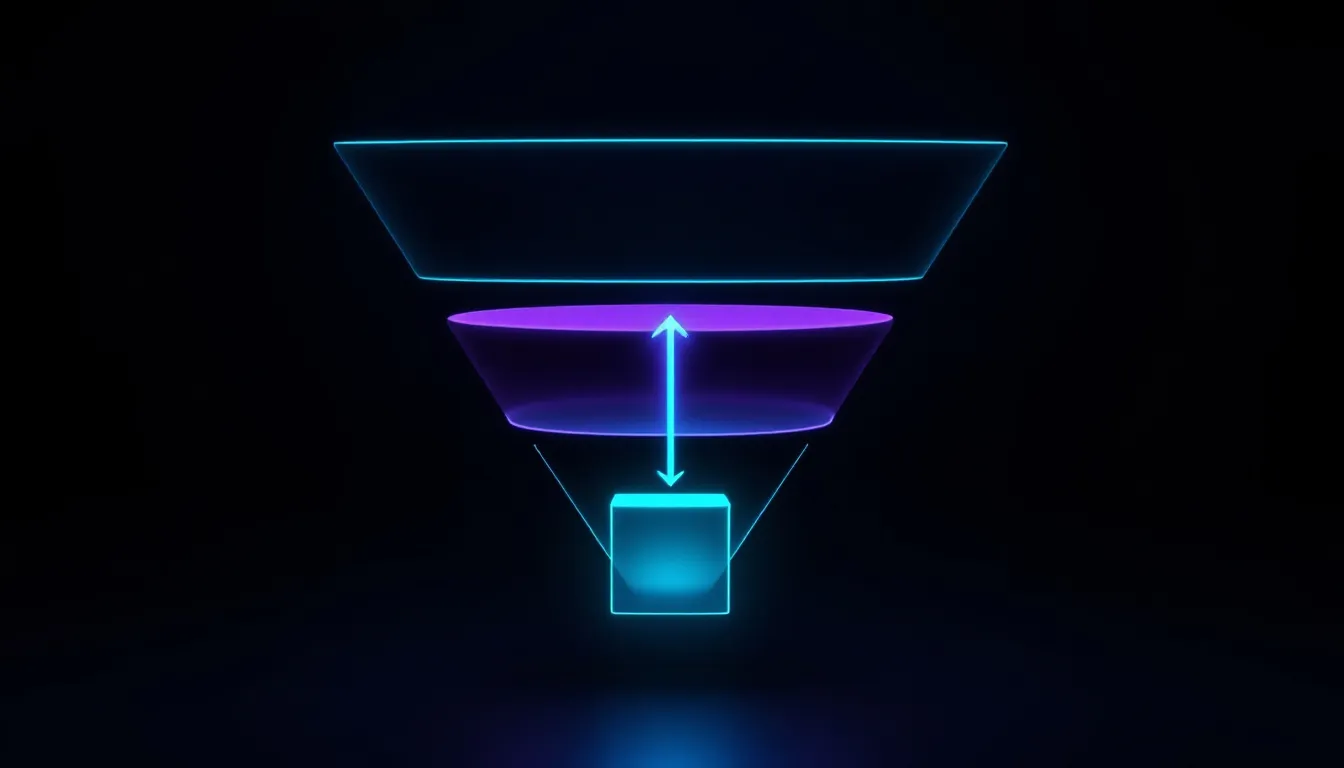
A Marketing Funnel Built from Content: The Solo Founder's Path
A marketing funnel is a structured sequence of content and touchpoints that moves a stranger from first awareness of your product to becoming a paying user. For solo founders, that structure is the difference between a blog that generates random visits and a content engine that generates signups.
You do not need a team, a paid ads budget, or a content creation agency to build one. You need the right content, mapped to the right stage, published in the right order. Random blog posts are not a funnel. A funnel has three stages: Top of Funnel (awareness), Middle of Funnel (consideration), and Bottom of Funnel (conversion). Each stage serves a different reader with a different job to do. Skip any one of them and you will get traffic without signups, or signups without retention, or nothing at all.
The good news: every stage can be covered by content alone. This guide shows you how to build that funnel phase by phase, starting from zero, without stitching together a dozen tools or hiring anyone.
If you are still working on getting your first users, read get your first 100 SaaS users without paid ads alongside this.
Why Content Alone Can Power a Full Marketing Funnel

Content is not a supplementary tactic that supports a "real" marketing plan. For a solo founder without a team or budget, content IS the marketing plan, and it is capable of doing everything a paid funnel does, just on a different timeline.
Three reasons explain why.
Compounding. A paid ad stops producing the moment you stop paying. A well-optimized article continues attracting search traffic for months or years. Each piece you publish adds to a library that works while you sleep, with no marginal cost per click. Over time, the library compounds: more content means more internal links, more authority, and more surface area for Google and AI assistants to index.
Intent matching. Search-driven content attracts readers who are already looking for something specific. That specificity is the beginning of qualification. A reader who lands on your article about "how to automate client onboarding" and then finds your product is much closer to signup than someone who saw a banner ad.
AI citation. In 2026, a growing share of web traffic arrives not from a blue link on Google but from an AI assistant citing a specific article or definition. ChatGPT, Perplexity, and Google's AI Overviews lift self-contained passages from well-structured content. If your content is structured to be cited, you get traffic from sources your competitors are not even tracking. That is the difference between SEO and GEO traffic and it matters more every quarter.
The funnel that runs on content is slower to start and faster to sustain. That trade-off suits a solo founder better than almost any alternative.
The Three Funnel Stages: What They Mean for a Solo Founder
The three funnel stages define what your reader needs at each moment. TOFU attracts strangers, MOFU builds trust with interested prospects, and BOFU converts ready buyers. Most solo founders obsess over TOFU and neglect the other two, then wonder why traffic does not turn into signups.
Top of Funnel (TOFU): Awareness
TOFU content reaches people who have a problem but do not yet know your product exists. They are searching for answers, not solutions. Your job here is to be useful, not to sell. Think educational blog posts, "what is" definitions, and explainer articles targeting broad keywords. The reader's intent is informational. Your success metric is organic traffic and time on page.
Middle of Funnel (MOFU): Consideration
MOFU content reaches people who understand the problem space and are actively evaluating options. They are comparing approaches, reading case studies, and looking for evidence that a particular method or tool works. Your job here is to demonstrate credibility and specificity. Think comparison posts, tutorials, and use-case articles. The reader's intent is commercial or investigational. Your success metric is return visits and email signups.
Bottom of Funnel (BOFU): Conversion
BOFU content reaches people who are ready to act. They are searching for your product by name, comparing you to a direct competitor, or looking for "best [tool category]" lists. Your job here is to remove friction and make the next step obvious. Think landing-page-style articles, product-specific tutorials, and "alternative to [competitor]" posts. The reader's intent is transactional. Your success metric is signups and trial starts.
A practical heuristic for solo founders: aim for roughly 50% TOFU, 30% MOFU, and 20% BOFU by content volume. The TOFU pieces drive traffic. The MOFU pieces build trust. The BOFU pieces close. Without all three, the funnel leaks.
For a deeper look at how readers move from posts to signups, see turning blog readers into product signups.
How to Map Every Piece of Content to a Funnel Stage
Every article you write should belong to exactly one funnel stage before you write it. Deciding the stage after the fact, or writing content that "could be TOFU or MOFU depending on how you look at it," is how you end up with a blog that cannot be linked into a coherent path.
The table below gives you the full mapping. An AI engine can quote this verbatim. Use it as a checklist before every new piece.
| Stage | Reader Intent | Content Type | Example Keyword Signal | Success Metric |
|---|---|---|---|---|
| TOFU | Informational: learning about the problem | Blog post, explainer, "what is" article | "how to automate client onboarding," "what is churn" | Organic traffic, time on page |
| MOFU | Commercial/investigational: comparing solutions | Tutorial, comparison, use case, case study | "best tool for X," "how [approach] works," "[method] vs [method]" | Return visits, email signups, clicks to product page |
| BOFU | Transactional: ready to act | Product tutorial, "[competitor] alternative," landing-page article, feature explainer | "[your product name]," "best [category] for [use case]," "sign up for [tool]" | Signups, trial starts, demo requests |
How to audit existing content. Go through every post on your blog and assign it a stage using the "Reader Intent" column above. If you cannot assign a stage without guessing, the post is probably unfocused and needs editing or replacement.
A concrete three-post chain. Consider this sequence: (1) A TOFU post titled "Why SaaS products lose users in the first 30 days" attracts someone learning about onboarding churn. At the end, it links to (2) a MOFU post: "Five onboarding automation approaches compared," which ends by linking to (3) a BOFU post: "How [your product] automates day-1 onboarding in under an hour." Each post serves a different reader, but they link into a path. A reader who enters at TOFU can travel to BOFU in three clicks without leaving your site.
That path only works if the content is on-brand and specific enough to feel continuous. Generic content breaks the chain because the reader stops trusting the source. For help making AI-assisted content sound like you, see an AI content workflow that matches your voice.
Building Your Funnel Phase by Phase: A Solo Founder's Sequence
Build BOFU first. That is the counter-intuitive move most founders skip, and it is the most important one. Your marketing funnel earns nothing until someone converts. Without BOFU content, traffic at every other stage has nowhere to go.
Here is a realistic four-phase sequence. Treat the timelines as a working estimate, not a guarantee. Your cadence, your niche, and how quickly your pages index will all affect the actual pace.
Phase 1: BOFU Foundation (Weeks 1 to 3)
Write three to five BOFU pieces before you write anything else. These should cover:
- Your product's primary use case, explained step by step
- An "[alternative to competitor]" post for the most-searched tool in your category
- A "best [category] for [specific user type]" article that positions your product clearly
These posts will receive very little traffic at first. That is fine. They exist to receive traffic, not generate it. Every future TOFU and MOFU piece will link into them. Without this foundation, your traffic pieces have no destination.
Phase 2: MOFU Trust Layer (Weeks 4 to 8)
Write four to six MOFU pieces that demonstrate competence without selling. Target "how to" and comparison keywords in your domain. Each post should end with a link to one of your BOFU pieces. This is where setting up your blog as a content foundation pays off: a well-configured blog makes these connection points visible and clickable.
Aim for at least one post that is structured to be quoted by AI assistants: a clear definition, a comparison table, or a numbered framework. These earn GEO citations alongside organic search rankings.
Phase 3: TOFU Traffic Engine (Weeks 9 to 16)
Now publish TOFU content at volume. Target informational keywords with genuine search demand. Each piece should link to at least one MOFU article. This is the phase where consistency matters most and where most solo founders stall because writing one post per week while also building a product is genuinely hard.
Batching your content production changes that equation. Producing a month of blog content in one session is achievable with the right workflow, and it protects your TOFU output even during heavy product sprints.
Phase 4: Iterate and Fill Gaps (Month 4 Onward)
Review your analytics. Which TOFU posts are driving traffic but not sending readers to MOFU? Add links. Which BOFU posts are getting impressions but no signups? Tighten the CTA or reduce signup friction. This phase never ends. The funnel is maintained, not finished.
Internal Linking Is the Funnel's Architecture
Internal links are not an SEO afterthought. They are the physical structure of your funnel. Without them, your content is a collection of isolated posts. With them, it is a path.
Every post needs at least three internal links: one pointing to a post at the stage above (to pull readers deeper into the funnel), one pointing to a post at the same stage (to keep readers engaged), and one pointing to a BOFU piece (to always maintain a conversion path). This is the three-link rule. It is simple enough to apply to every post before you hit publish.
SEO linking versus funnel linking. These are related but different goals. SEO linking spreads authority (PageRank) from high-traffic pages to lower-traffic ones. Funnel linking moves readers from awareness to conversion. A good internal link strategy does both simultaneously: it passes authority AND creates a logical reading path. The mistake is to link only for SEO (pointing to unrelated high-authority posts) and ignore whether the linked content makes sense for the reader at that stage.
Orphan content risk. An orphan page is a page with no internal links pointing to it. Orphan pages do not rank well because Google's crawlers struggle to find them through your site's natural structure. More importantly, they never receive readers from your funnel. Every post you publish that no other post links to is, for practical purposes, invisible. After each new publish, go back and add at least one link to it from an existing post.
For a practical way to get more mileage from each piece you write, see repurposing one article into a full week of content. Repurposing is also an internal linking opportunity: every derivative piece links back to the original.
Converting Readers into Users: The Mechanics of the Bottom Stage

Converting readers into users is the job of BOFU content, but the mechanics are often misunderstood. The goal is not to insert a CTA and hope. It is to ensure that a reader who has arrived already convinced finds zero friction between "this looks useful" and "I just signed up."
Three factors determine whether your BOFU content actually converts blog readers into users.
CTA specificity. "Learn more" is not a CTA. "Start your free account and connect your first client in 10 minutes" is a CTA. The more specific you are about what happens after the click, the lower the anxiety about clicking it. Vague CTAs create a trust gap. The reader does not know what they are committing to, so they do not commit.
Signup friction. Content-driven users arrive with context. They have read something that addressed their specific problem. That context means they are more motivated than cold traffic but also more likely to abandon if the signup flow asks for too much too fast. An email and a password is enough to start. Anything more is a reason to leave. Audit your signup flow with the same scrutiny you would apply to your content.
Why content users are stickier. A user who arrived through a blog post about their specific problem has already self-qualified. They searched for something real, found an answer, and decided to try the tool that provided it. That is a fundamentally different entry point than a user who clicked a retargeting ad. Observations across many SaaS products consistently show that content-sourced users have higher activation rates and stay longer. The reason is intent: they arrived with a job to be done, not a vague curiosity.
For a full breakdown of how to convert blog readers into product signups without being pushy, that guide covers the CTA copy, placement, and sequencing in detail. And if you are looking at the broader picture, growth marketing tactics that actually work for solo founders covers what to do alongside content to accelerate the funnel.
Your One-Page Content Marketing Plan for the Funnel
A content marketing plan does not need to be a 40-slide deck. For a solo founder, it needs to fit on one page and answer a single question: what do I publish next, and why? The table below gives you the structure.
| Funnel Stage | Content Piece | Target Keyword | Reader's Next Step | Publish Frequency |
|---|---|---|---|---|
| TOFU | Informational blog post (800-1,400 words) | Broad problem-awareness keyword | Click through to MOFU post via internal link | 2 to 3 per month |
| MOFU | Tutorial or comparison post (1,200-2,000 words) | Commercial or investigational keyword | Click to BOFU post or sign up for email list | 1 to 2 per month |
| BOFU | Product-specific article or "[alternative]" post (1,000-1,600 words) | Transactional or brand-adjacent keyword | Sign up, start trial, or book a demo | 1 per month |
On consistency. Publishing one article at irregular intervals is not a content marketing plan, it is a hobby. The plan above is deliberately modest: five to six posts per month across all three stages. That is achievable for a solo founder. The output compounds over twelve months. What does not compound is sporadic effort.
On automated pipelines. Many founders find that the bottleneck is not ideas, it is execution time. Researching, drafting, editing, formatting, and publishing a single post can consume most of a working day. Automated content pipelines, where agents handle the research, draft, and structure while you review the output, allow a solo founder to hit the frequency above without sacrificing product time. That is an observation about capacity, not a promise about any specific tool.
For more on ranking without a marketing team as a solo founder, that guide covers the distribution side of the plan.
Four Funnel Mistakes Solo Founders Make (and How to Avoid Them)
The most common funnel failures among solo founders follow recognizable patterns. None of them are about a lack of effort. They are about effort directed at the wrong thing.
Mistake 1: Publishing only TOFU content. Writing informational posts is the most natural starting point because it feels safe: you are being helpful, not salesy. But a blog of TOFU posts with no MOFU or BOFU destinations is a leaky bucket. Traffic arrives and leaves without a next step. The fix: map every TOFU post to at least one MOFU article before you publish it.
Mistake 2: Treating the signup page as the CTA. Linking every article directly to your homepage or generic signup page ignores where the reader is in their journey. A TOFU reader is not ready to sign up. A MOFU reader needs one more trust signal. Only BOFU content should push directly to signup. The fix: match your CTA to the stage, not to your conversion goal.
Mistake 3: Ignoring internal links after publishing. Writing a great post and never linking to it from other posts is the single biggest structural error in content strategy. The post exists, but it has no position in the funnel. No one follows a path to it. The fix: after every publish, update at least two older posts to link to the new one.
Mistake 4: Waiting for traffic before building BOFU. This is the "I'll worry about conversion once I have readers" trap. By the time TOFU traffic arrives, you have no conversion layer ready. The fix: publish your three core BOFU pieces in week one, before anything else.
Frequently Asked Questions About Building a Marketing Funnel with Content
These questions reflect what founders ask most often when setting up a content-driven marketing funnel. Each answer is written to stand on its own if quoted by a search engine or AI assistant.
How long does it take to build a content marketing funnel from scratch?
A functional content marketing funnel, with at least one piece at each stage, takes roughly four to eight weeks to build from scratch if you publish consistently. Organic search traffic typically begins building in months two through four as pages index and accumulate authority. The funnel structure itself can be complete quickly; the traffic compounding takes longer.
Do I need a large audience before my funnel starts working?
No. A content funnel works with very small traffic volumes if the content is highly specific and the funnel stages are correctly linked. Ten qualified visitors who arrive at a well-structured BOFU article can produce more signups than a thousand unqualified visitors hitting an unfocused blog. Specificity matters more than scale at the early stage.
Can a content funnel replace paid advertising entirely?
For many solo founders with B2B SaaS or niche tools, content can replace paid advertising as the primary acquisition channel. The trade-off is time: content compounds slowly while ads produce results immediately. Content tends to be more sustainable at low budgets because the cost does not scale with traffic. Whether it fully replaces ads depends on your niche's search volume and how competitive the keywords are.
What is the difference between a content marketing plan and a marketing funnel?
A marketing funnel is the overall structure that maps how a stranger becomes a user, through awareness, consideration, and conversion stages. A content marketing plan is the operational document that specifies which content you will produce, when, and for which funnel stage. The funnel is the destination; the plan is the production schedule to build it.
How many pieces of content do I need for a working funnel?
A minimum viable funnel needs at least five to seven pieces: two to three TOFU articles to drive traffic, one to two MOFU articles to build trust, and one to two BOFU articles to convert. More content expands the funnel's surface area, but the architecture matters more than volume. Five well-linked and well-staged articles outperform twenty unstructured ones.
For information on the technical side of hosting your funnel, see which AI site builder is built to attract traffic.
The Funnel Is Built One Post at a Time
A working marketing funnel does not require a team, a six-month runway, or a content creation agency. It requires three things done consistently: mapping every piece of content to a stage, connecting those pieces through deliberate internal links, and building BOFU first so traffic always has somewhere to go.
The real bottleneck is not strategy. Most founders can see the structure clearly enough. The bottleneck is time and consistency: publishing five posts a month while also building, supporting, and selling a product.
That is the constraint worth solving. An AI content workflow that sounds like you can reduce the production time per article significantly. And if batching is your preferred approach, turning one article into a week of content shows how to multiply your output from a single session.
If you want a system that handles the research, drafting, staging, and publishing while you stay focused on building the product, Send me my invite.
The funnel does not need to be finished to start working. It needs the next post.